Product data
| Name | Screw Barrel Solution for Semi-solid Magnesium Alloy Injection Processing |
|---|---|
| Typical Application | Automotive, 3C electronics |
| Process Method | Injection |
| Material Recommendation | 1.2888 |
| Surface Treatment | Hardened |
| Hardness | HRC 54 - 60 |
| L/D Ratio | 18:1 - 22:1 |
| Max Temperature | ≤ 700°C (1292°F) |
Technical Challenges
- Semi-solid magnesium alloy is processed near 600°C, far above conventional plastic temperatures, demanding heat-stable screw and barrel materials.
- Magnesium is chemically reactive and oxidises rapidly, requiring controlled atmosphere and oxygen-free melt handling.
- High abrasiveness of the alloy chips wears screw flights and barrel bore at elevated temperature.
- Precise temperature control is critical to maintain the semi-solid slurry and avoid freezing or overheating.
Rootier's Technical Solutions
- 01Screws and barrels built from heat-resistant hot-work steel (1.2888) that retains hardness at magnesium processing temperature.
- 02Hardened and tempered surfaces that resist abrasion from magnesium chips at elevated temperature.
- 03Specialised screw geometry engineered for semi-solid slurry conveying without shear overheating.
- 04Barrel design with precise zone temperature control to hold the slurry in the semi-solid window.
- 05Corrosion- and oxidation-resistant surface treatment for the magnesium processing environment.
Frequently Asked Questions
AZ91D (Mg-Al-Zn), AM60B (Mg-Al-Mn), AE42 (Mg-Nd) — high strength-to-weight, processed via specialized injection molding.
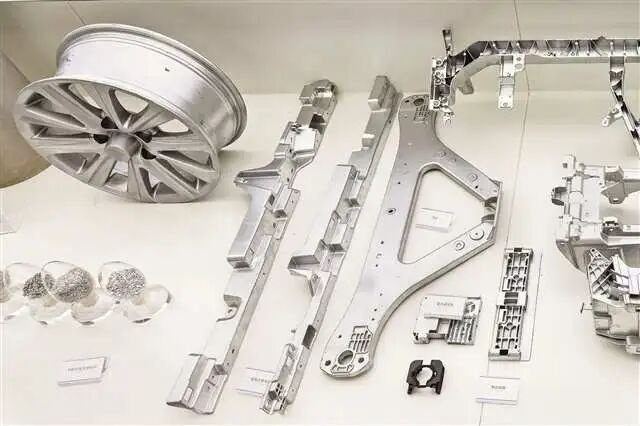
Lightweight automotive parts (gear knobs, brackets, seat frames), aerospace components, handheld electronics housings, medical implants.
semi-solid processing design, precise temperature control, corrosion-resistant coated tool steels, specialized rheology handling.
Much higher temps (600–750°C), requires inert atmosphere (Ar/SF₆) to prevent combustion, different feeding mechanisms, and specialized high-temp resistant screw materials.
Alloy grade & processing temp range, injection pressure/speed, part geometry/wall thickness, production volume, inert gas system specs, and surface requirements.