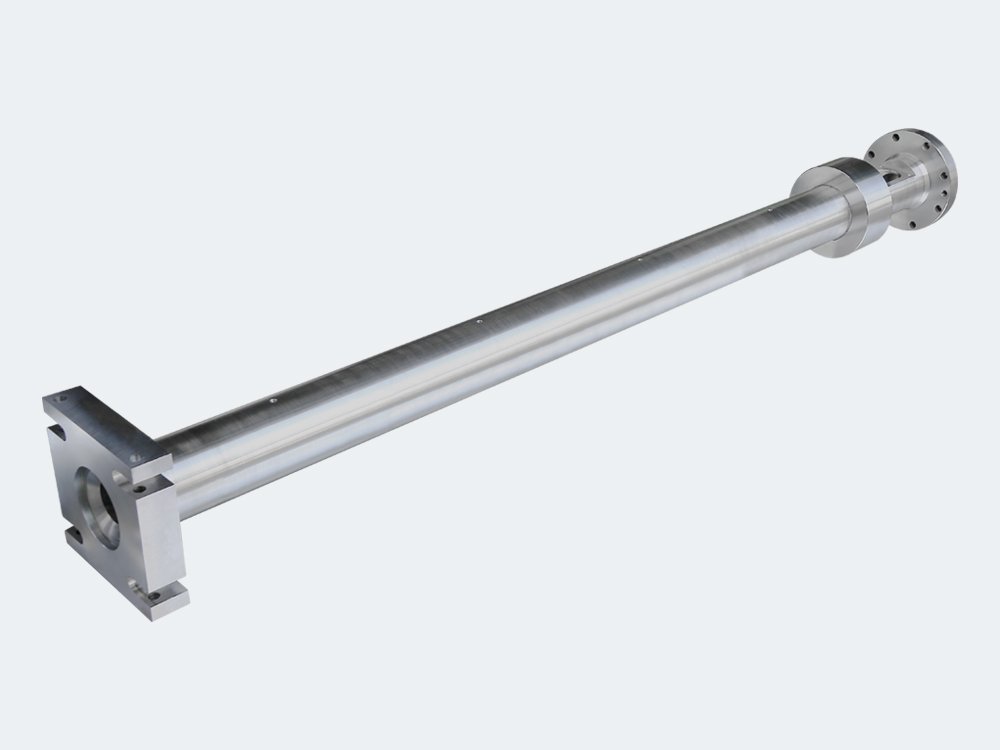
Extrusion Single Barrel
Extrusion single barrels feature wear-resistant bores with cooling or heating zones to specification. Available in nitrided and bimetallic grades, an optimized feeding structure supports high output while tungsten-added and selected alloys suit abrasive and halogen-free flame-retardant processing.
Technical data
| Name | Extrusion Barrel |
|---|---|
| Material | 38CrMoAlA, Bimetallic |
| Treatment | Nitriding, Centrifugal Casting |
| Manufacturing | Drawing or Sample Based |
| Grades | Hardness | Treatment | CTE (400°C) | Anti-Wear | Anti-Corrosion | Application |
|---|---|---|---|---|---|---|
| T-100 | 950HV | Nitrided | 12.8x10⁻⁶ | ★★ | ★ | General Purpose |
| T-200 | 60-62HRC | Centrifugal Casted | 12x10⁻⁶ | ★★★ | ★★ | Re-grind Polymer |
| T-300 | 62-64HRC | Centrifugal Casted | 12x10⁻⁶ | ★★★★ | ★★★★ | Corrosive & Abrasive |
| T-400 | 62-66HRC | Centrifugal Casted | 12x10⁻⁶ | ★★★★★ | ★★★★★ | Extreme Wearing |
Engineering highlights
- Optimized feeding structure for high output
- Tungsten added alloy for better wear resistant
- Selected alloy for halogen-free fire retardant
Frequently Asked Questions
The single barrel houses the extrusion screw and forms the controlled processing channel through which polymer is conveyed, melted, mixed, and pressurized.
Abrasive fillers such as glass fiber, mineral additives, and other wear-producing materials can accelerate barrel wear. High temperature and continuous operation can also contribute.
Excessive clearance can reduce conveying efficiency, increase leakage between the screw and barrel, reduce output, and make process control more difficult.
Yes. ROOTIER can provide customized single barrels with material and surface-treatment options selected according to the polymer and wear conditions.