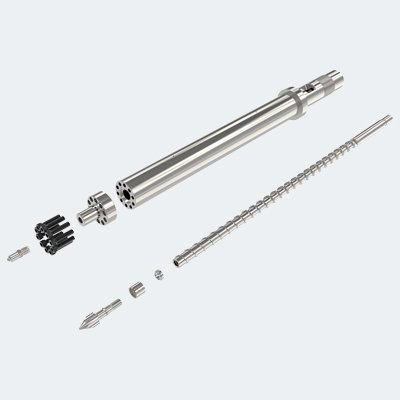
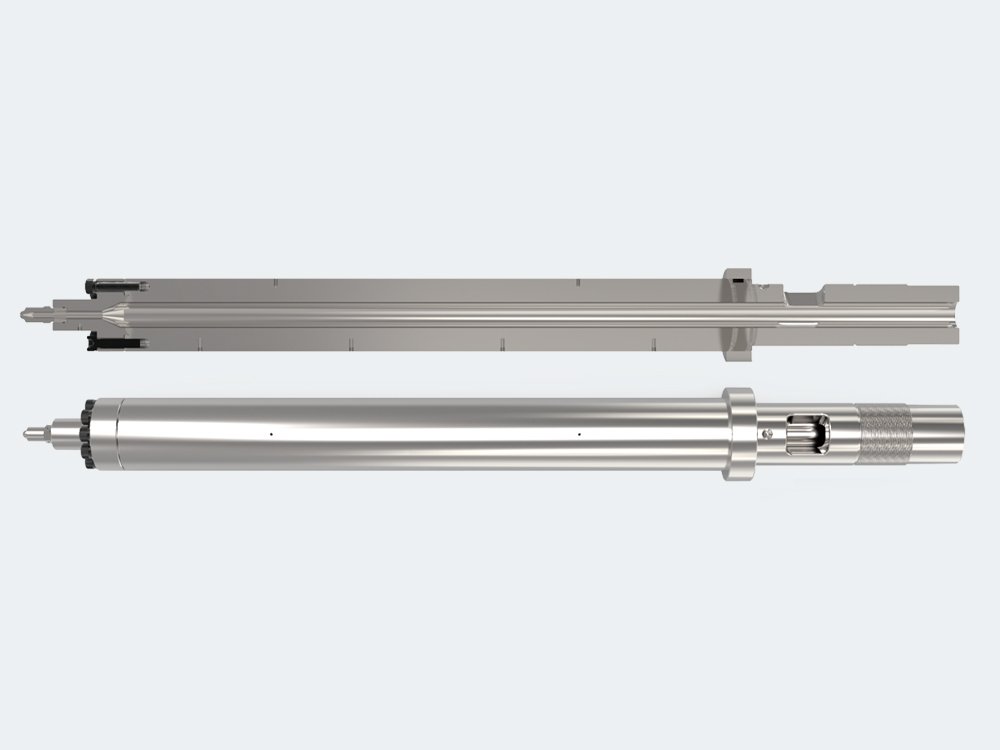
Injection Barrel
Injection barrels are manufactured in nitrided and bimetallic grades for reliable melt quality and wear resistance. A non-temper base material with high hardness prevents barrel cracking, while tungsten-added and selected alloys suit abrasive and halogen-free flame-retardant processing.
Technical data
| Name | Injection Barrel |
|---|---|
| Material | 38CrMoAlA, Bimetallic |
| Treatment | Nitriding, Centrifugal Casting |
| Manufacturing | Drawing or Sample Based |
| Grades | Hardness | Treatment | CTE (400°C) | Anti-Wear | Anti-Corrosion | Application |
|---|---|---|---|---|---|---|
| T-100 | 950HV | Nitrided | 12.8x10⁻⁶ | ★★ | ★ | General Purpose |
| T-200 | 60-62HRC | Centrifugal Casted | 12x10⁻⁶ | ★★★ | ★★ | Abrasive with <GF35 |
| T-300 | 62-64HRC | Centrifugal Casted | 12x10⁻⁶ | ★★★★ | ★★★★ | Corrosive & Abrasive |
| T-400 | 62-66HRC | Centrifugal Casted | 12x10⁻⁶ | ★★★★★ | ★★★★★ | Extreme Wearing |
Engineering highlights
- Non-temper base material with high hardness preventing from barrel crack
- Tungsten added alloy for better wear resistant
- Selected alloy for halogen-free fire retardant
Frequently Asked Questions
Abrasive fillers, corrosive additives, high processing temperatures, prolonged operation, and unsuitable material combinations can contribute to barrel wear.
Excessive clearance between the screw and barrel can reduce plasticizing efficiency, increase material leakage, affect shot consistency, and reduce overall machine performance.
Replacement should be considered when measured wear exceeds the acceptable clearance for the machine or when production problems such as unstable shot weight and reduced output occur.
Yes. ROOTIER manufactures replacement injection barrels according to machine specifications, dimensions, material requirements, and wear-resistance needs.